
WHAT IS SEO FOR Landscapers?
If you have a landscaping business and the website just won’t show up anywhere on Google, then you have an SEO problem.
SEO for landscapers means tweaking your online content so that it shows up on search engines like Google and Bing when people look for lawn care, garden design, or general landscaping services.
This read will be exclusively for landscapers who want to do SEO to grow their business, get more prospects, and build a lasting brand in any part of the US.
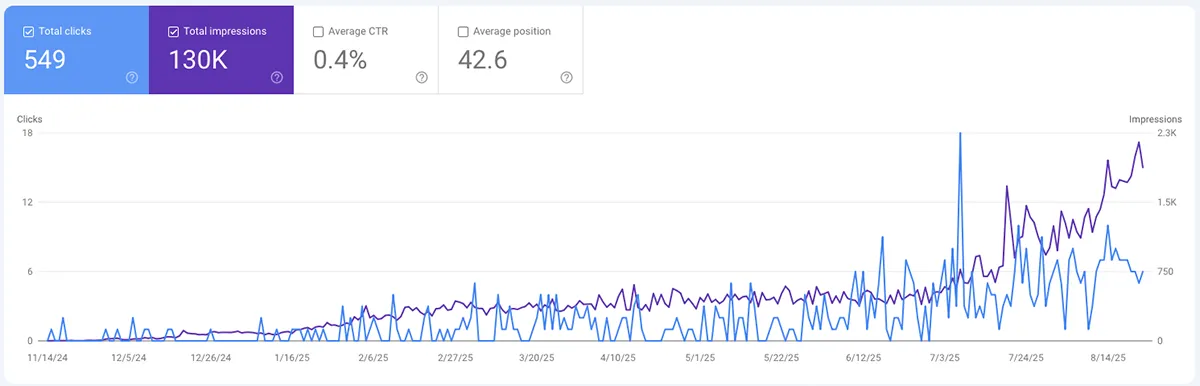
Common SEO Terms For Landscaping Business
- SEO - Short for Search Engine Optimization, it means creating website content targeting landscaping words and topics, so your pages show up higher on Google
- Keyword - The actual words people type into search engines when they need landscaping help, like 'landscaper near me'.
- SERP - Or the Search Engine Results Page, is the page you see after searching anything on Google.
- Google Business Profile - This is your business page on Google and Google Maps, where people can call you, get directions, read Google reviews, or visit your website
- Ranking - This is the place where your page shows up after someone searches for a keyword. Your page can show up first, second, third (and so on).
- Index - Your page is indexed when Google's algorithm 'crawls' your website, see what's it about, and decides to show it in the results.
- Local map pack - The top three local landscaping companies that pop up on Google and Maps.
- Linking - This is when a button click from your page leads to another page on your site (internal) or to another website (external)
- Backlink - When another website links to your site.
- Organic SEO - Making your website rank better by using keywords, backlinks, and other strategies without paying Google for it.
- Paid SEO - Running ads to get your landscaping service seen on Google.
- Bounce rate - How many people visit your site and leave immediately
- Click-through rate - How often people click on your listing when they see it.
- Conversion rate - The percentage of visitors who actually request a quote or call you.
Why Do Landscapers Need SEO?
Someone needs their lawn fixed right now, but they don’t know who to call, so they search online.
If your business doesn’t show up, your competitor gets that call; it’s as simple as that.
Putting the effort into SEO will get you in front of competitors so that next time someone searches up “landscapers” on Google, they will see you first, go to your website, and give you a ring.
This is what it’s all about: ranking your website at the top, getting as many lead prospects as possible, and therefore getting a steady stream of landscaping projects.
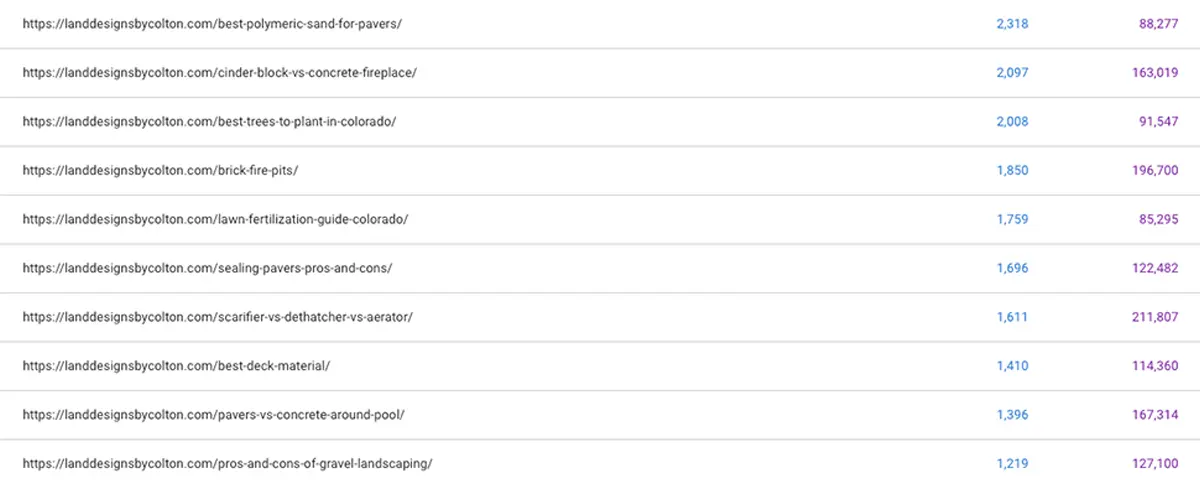
SEO for Landscapers Starts With These 3 Steps
Want to start doing some basic SEO for your landscaping company, or at least see how your website performs?
Here are 3 steps to start…
# 1. Make Sure Google Actually Knows You Exist
This sounds obvious, but you’d be shocked at how many landscaping websites aren’t even indexed properly. I’ve seen beautiful websites that might as well not exist because Google doesn’t know about them.
Here’s how to check:
- Log in to Google Search Console
- If you don't have access, call whoever built your website and ask them about it. If they look confused, that's a red flag; it means they didn't set up one of the most basic SEO tools.
- Once you're in, use the URL inspection tool and enter your website address.
- Hit inspect. If your site is new, it might take a few days to show up in Google's index.
There’s also a quick shortcut: Go to Google and type “site:yourwebsite.com” (use your actual domain). If your pages show up, you’re indexed. If nothing appears, that’s a problem.
To fix indexing issues, you’ll need to submit your sitemap through Google’s tool by following Google’s guide to get your site indexed, which explains the technical process.
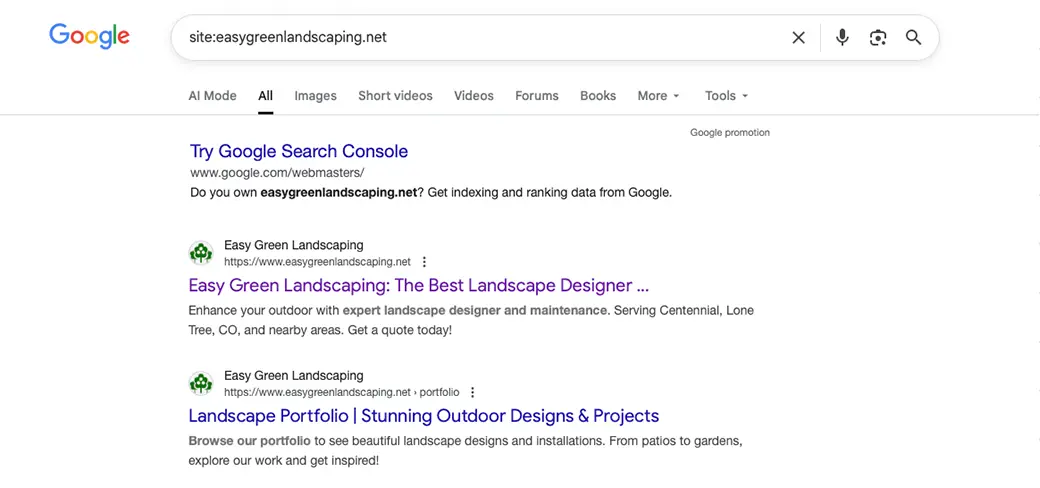
Paid SEO tools like Ahrefs can offer more depth and insights into keywords, but it’s a much more complicated (and expensive) tool.
#2. Keyword Research for Landscaping Contractors
Before you create new service pages, city pages, or blog posts, you need to know what homeowners are actually typing into Google.
That’s what keyword research is: finding the real search terms people use, then building your website pages around them.
For example, customers usually don’t search “horticultural maintenance.” They search:
- “lawn mowing service”
- “yard cleanup near me”
- “landscaper in [city]”
- “mulch installation cost”
How to do quick keyword research:
- 1. List your services (lawn care, sod, mulch, patios, irrigation, etc.
- 2. Type each service into Google and use the autocomplete suggestions
- 3. Add location keywords like: “[service] + city” “[service] near me” “[service] + cost”
- 4. Use a tool like Google Keyword Planner, Ahrefs, or Ubersuggest to confirm search volume
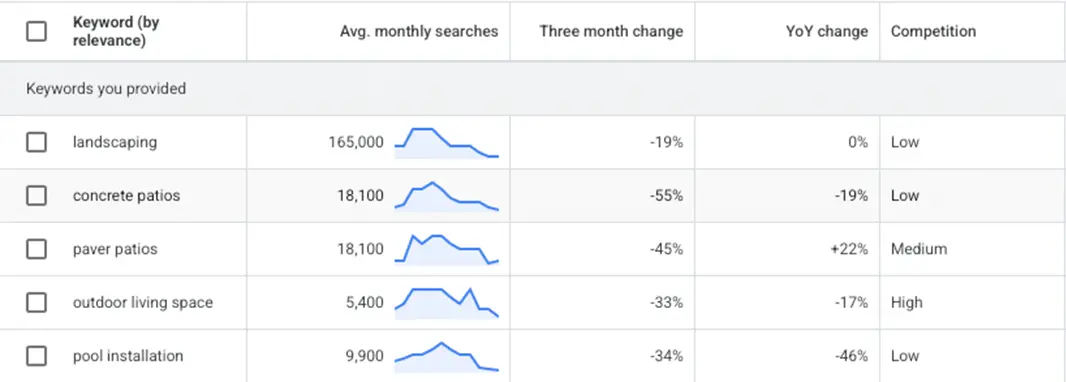
Feeling overwhelmed by keyword research already? That’s normal. Most landscaping business owners are. We handle all of this for our clients so they can focus on actually running their business.
#3. Improve What You've Already Got
Write Content That Matches How People Actually Search
Use specific, longer phrases. Instead of just targeting “landscaping” (good luck ranking for that, you’re competing with massive national companies), go after “residential landscaping company in Boise, Idaho.”
Way less competition, way more qualified leads.
The more specific you get with location and service, the easier it becomes to rank first. And that’s what matters.
Fix Your Images (Yes, This Actually Helps SEO)
Your before-and-after photos are probably some of your best marketing material.
But if they’re named “IMG_2847.jpg,” you’re wasting an opportunity.
Here’s some good advice when uploading project photos to your site:
- Rename them with descriptions like "backyard-landscape-renovation-phoenix.webp" or "commercial-lawn-maintenance-before-after.webp."
- Convert all JPEG or PNG images to WEBP. It makes images easier to load, increasing the speed of your site.
- Resize your images before uploading. Nothing needs to be bigger than 1200 pixels wide.
- ALWAYS add alt text to every image. This descriptive text helps Google understand what the picture shows before it loads. It's also great for accessibility.
Write Titles and Meta Descriptions That Make People Click
The title impacts your search ranking big time. Make it clear and include your main keywords: “Denver Landscaping Services | Patios, Decks & Outdoor Living”
The meta description doesn’t directly affect rankings, but it can greatly increase the rate of which people click on your listing and go to your website.
Something like “Award-winning landscape design and lawn maintenance in Denver. Free quotes, 20+ years experience. Call today!” works way better than “We do landscaping.”
#4. Create New Content That Brings in Customers
Write Titles and Meta Descriptions That Make People Click
Every major service you offer needs its own dedicated page. Not a paragraph on your homepage, an entire page.
If you do landscape design, lawn care services, hardscaping, irrigation, and tree services, that’s five separate pages minimum.
Each service page should thoroughly cover that topic.
Answer the questions homeowners actually have:
- What does it cost?
- How long does it take?
- What materials do you use?
- Why should they hire a professional instead of DIYing it?
- Do you have a warranty?
Include your before and after photos, customer testimonials if you have them, and naturally work in relevant keywords throughout the content.
These pages help you rank for specific searches like “lawn mowing” or “landscape maintenance” that prospective clients are typing into search engines every single day.
Location-Based Service Pages (This Strategy Is Killer)
This is honestly one of the best tactics for local SEO, and most of your local competitors probably aren’t doing it.
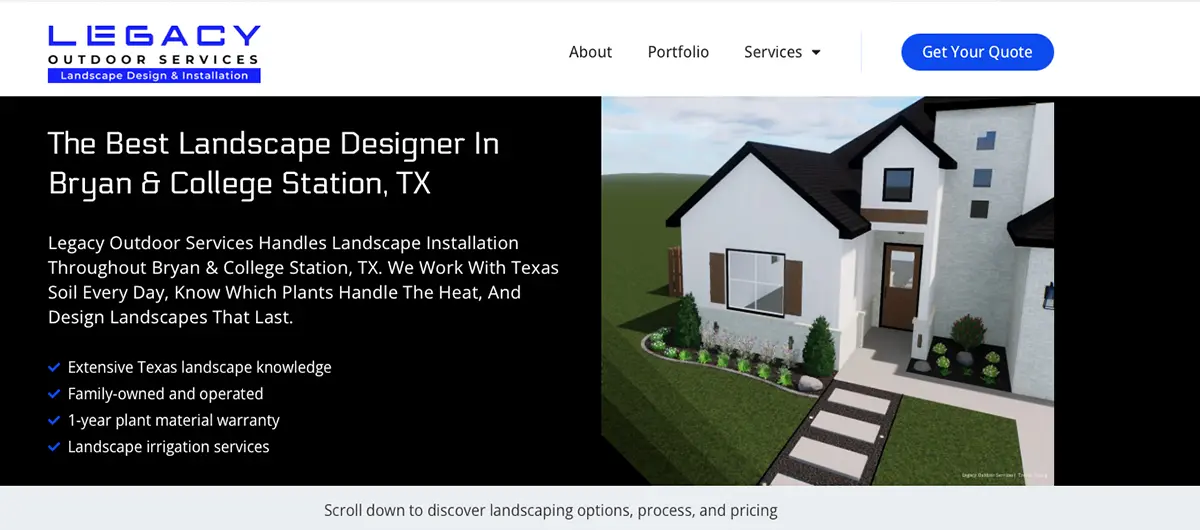
Create a separate page for every city or neighborhood you serve. Not just a list of service areas but actual dedicated pages.
So if you serve Scottsdale, Tempe, and Mesa, that’s three pages: “Landscaping Services in Scottsdale AZ,” “Tempe Landscape Contractor,” and “Mesa Lawn Care and Landscaping.”
These location-based service pages absolutely crush it for local search because they match exactly how local customers search. Someone in Scottsdale isn’t typing “landscaping”, they’re typing “landscaping Scottsdale” or “landscaper near me” (which Google interprets based on their location).
Blog Posts (Not As Boring As They Sound)
I know, I know, you became a landscaper because you like working outside, not writing articles. But blog posts are genuinely powerful for SEO.
They let you rank for long tail keywords (those longer, specific phrases) and they prove to potential customers that you actually know what you’re doing.
Write about stuff your target audience actually cares about:
- "How Much Does Landscaping Cost in [Your City]?" (People search this constantly)
- "Best Plants for Arizona Desert Landscaping" (or whatever climate you're in)
- "Spring Lawn Care Checklist"
- "Recent Projects: Before and After Transformations"
You don’t need to write a novel. A solid 800-1,200-word article with some images is plenty.
And here’s a secret: if you’re not a writer, just record yourself talking about the topic on your phone, get it transcribed, and clean it up. Way easier.
Blog posts also create natural opportunities to link to your service pages (internal linking), which helps your website’s SEO overall.
Specialized Service Pages
These are the secret weapon pages that most landscaping companies completely miss.
Think about all the adjacent services you offer as part of your main work. Outdoor lighting. Paver patios. Retaining walls. Pergolas. Irrigation systems. Drainage solutions.
For lawn care companies, it might be aeration, overseeding, fertilization, weed control, or grub treatment.
Every single one of these deserves its own page optimized for those specific keywords.
Why? Because homeowners search for these specific services, and if you have a dedicated page for it, you’ll rank for it.
Your competitor who just mentions “we also do irrigation” in a paragraph somewhere?
They’re not ranking for “irrigation installation near me.” But you will be, if you build that page properly.
Advanced SEO Strategies For Landscaping Businesses
Okay, so you’ve got the foundation built. Now let’s talk about the stuff that really separates winners from everyone else in local search.
Absolutely Nail Your Google Business Profile
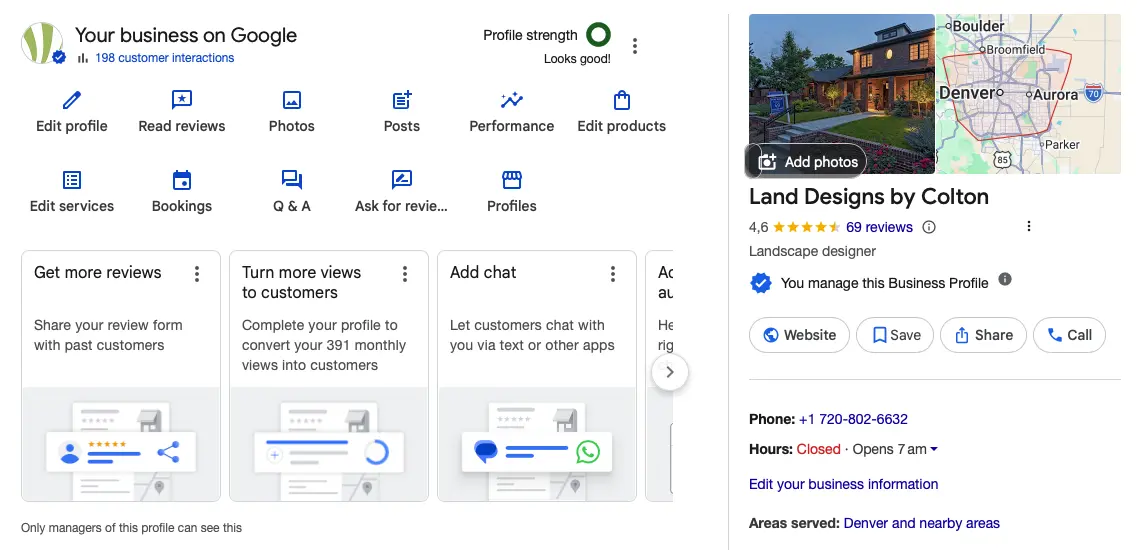
Your Google Business Profile is probably the single most important thing for local visibility.
I’m not exaggerating. This is where the magic happens for local businesses.
Make sure everything is filled out completely:
- Business name, address, phone number (and make sure these match exactly everywhere else online, Google checks)
- Hours of operation
- Service areas (list every city you cover)
- Business categories (primary category: Landscape Designer or Lawn Care Service, then add secondary ones)
- Detailed business description with your core services mentioned
- Website link
- Before and after photos of your landscaping jobs (upload a lot, Google loves this)
- Posts and updates (yes, you should actually post regularly)
A properly optimized Google Business Profile can get you into that coveted local map pack, those three businesses that show up with map pins. That’s prime real estate. Those three spots get the majority of clicks and phone calls.
Check out Google’s tips to improve your local ranking on Google Business Profile.
Online Reviews Are Non-Negotiable
Google reviews directly impact your local rankings.
The more positive reviews you have, the higher you rank in local search results.
But here’s what matters more than just the number: recency and responses.
We have an article about how to get reviews on your Google Business Profile easier. Check it out right here.
Other quick tips:
- Respond to all reviews, positive and negative
- People care more about negative reviews, so answer those reviews professionally
- You get bonus points if the reviews you get have images in them
- Always ask for a review post-job
- More bonus points if the reviews contain important keywords (your service and location)
Don't Sleep on Social Media
Social media posts don’t directly boost your search ranking, but they absolutely help with online visibility and brand awareness.
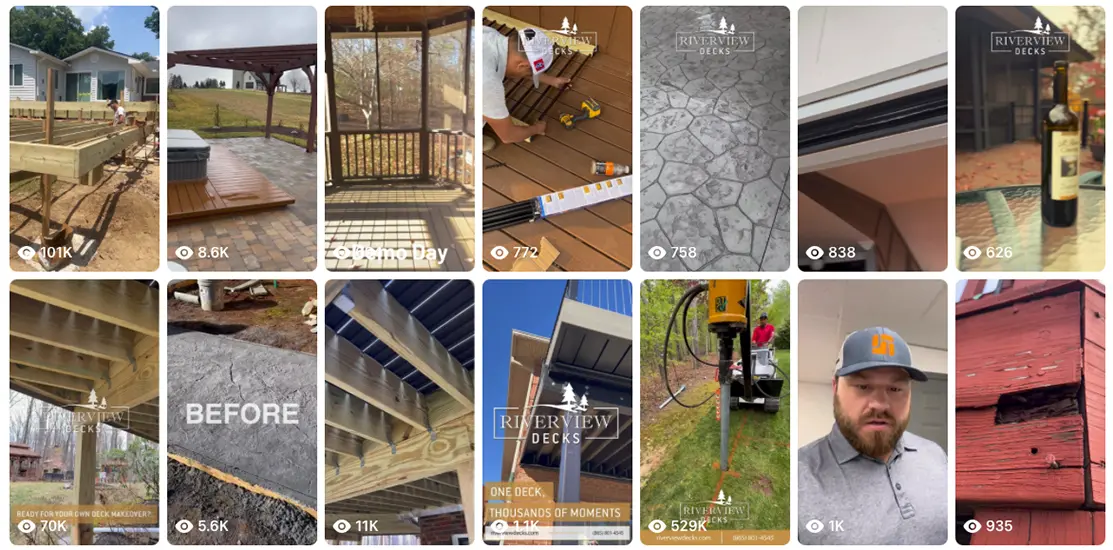
Post your best work. Show those amazing transformation photos. Share landscaping tips. Give people a behind-the-scenes look at your projects.
When people recognize your business name from seeing it on Facebook or Instagram, they’re way more likely to click your listing in search results. It builds trust.
Plus, social media can drive traffic directly to your landscaping website, which Google does notice.
Interested in learning more about doing social media for your landscaping business? Check out our recent article!
Use Google Ads While You're Building Organic Rankings
SEO takes time. Like, months. That’s just reality.
While you’re working on your SEO efforts to improve organic traffic, Google Ads can generate leads immediately.
You’re literally buying your way to the top of search results, and you only pay when someone actually clicks. This is perfect when you need to fill your schedule quickly, or you’re a new company that hasn’t built up rankings yet.
The downside? It costs money per click, and the second you stop paying, you disappear. That’s why organic SEO is better long-term; once you rank well naturally, those leads keep coming without ongoing ad spend.
But combining both? That’s the sweet spot. Ads for immediate results, SEO for long-term sustainable growth.
Speaking of paid advertising, Local Service Ads are a powerful option for landscapers that can get you leads fast. Check out our complete guide on Local Service Ads for contractors to see if they’re right for your business.
Actually Use Google Analytics
If you’re not tracking your website’s performance, you’re flying blind.
Google Analytics shows you everything: how many people visit your site, where they come from, which pages they look at, how long they stay, and most importantly, whether they contact you.
You can see exactly which SEO strategies are working. Maybe your blog post about “spring lawn care” is bringing in tons of traffic, but nobody’s calling. That tells you something. Maybe your service pages are converting visitors into leads at a high rate. That tells you to create more pages like that.
Check your analytics at least once a month. Look for patterns. Double down on what’s working.
Your Site Better Work on Phones
Most homeowners search for landscaping services on their phones while they’re literally standing in their yard looking at the problem they need fixed.
If your website doesn’t load properly on mobile, they’re hitting the back button and calling your competitor instead.
Google actually prioritizes mobile-friendly websites in search rankings now. If your site is terrible on phones, you’re getting punished with lower rankings. It’s that simple.
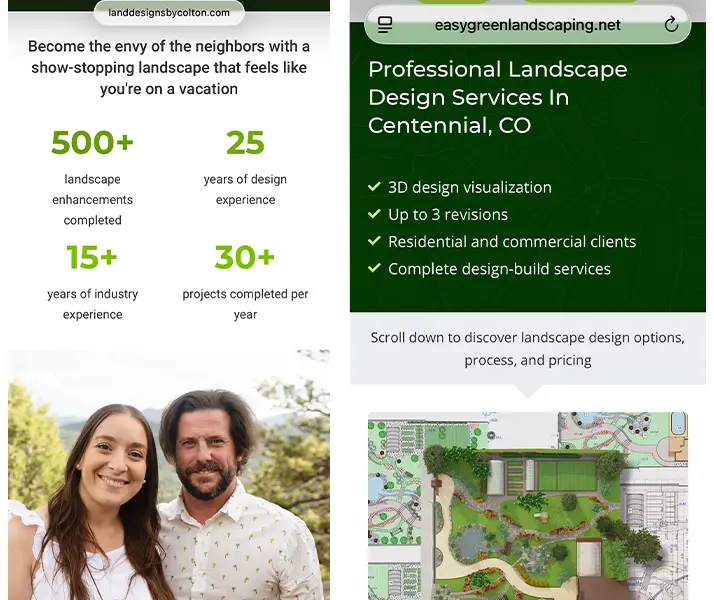
Test your site on different devices. Pull it up on your phone right now. Does it load fast? Are the buttons big enough to tap? Can you easily find the phone number to call?
If not, fix it.
This is non-negotiable for SEO in 2026.
Google has specific mobile-friendly testing and guidelines where you can check your site’s performance and see exactly what needs fixing.
Tracking Your SEO Progress
Google Analytics – A free tool that shows you everything about your website traffic. How many visitors, where they came from, which pages they viewed, and whether they converted into qualified leads. This is foundational stuff.
Google Search Console – Also free, and it shows you exactly what’s happening in search results. Which keywords you rank for, your average position, how many impressions you’re getting, and any technical SEO issues that need fixing. Check this regularly.
Ahrefs – This one costs money, but it’s powerful. Shows detailed keyword rankings, lets you spy on what local competitors are doing, tracks your backlinks, and helps with keyword research. Worth it if you’re serious about dominating local search.
Hootsuite – For managing social media posts across different platforms. Lets you schedule stuff in advance and track engagement. Not directly related to SEO, but helps with overall online visibility.
The key is actually looking at this data regularly and adjusting your strategy based on what you learn. Too many people set up these tools and then never check them again. Don’t be that person.
Once leads start coming in, you need a system to qualify them quickly. Not every inquiry is worth your time. Here’s how to filter leads effectively so you only spend time on qualified prospects.
Should You DIY This or Hire Help?
Real talk: You can absolutely do landscaping SEO yourself if you’ve got the time and you’re willing to learn.
The DIY approach saves money upfront.
Follow everything in this guide, put in the work consistently for 6-12 months, and you’ll probably see good results.
The learning curve is real, though, and it’s going to eat up time you could spend running your business or actually doing landscaping work.
What's the cost of SEO for Landscapers?
The cost varies, but good SEO services for landscaping companies usually run anywhere from $1,500 to $5,000+ per month, depending on your market and goals.
When you realize the value and revenue this investments gets you back, the cost of SEO starts meaning less and less.
At Contracting Empire, we specifically work with landscaping businesses, and we’ve seen what works across different markets. We’ve helped lawn care companies and full-service landscape contractors completely dominate their service areas.
Check out our Marketing Cost Calculator and see for yourself the cost to run ads, do SEO, and improve your brand image!
Common Mistakes That Kill Your Rankings
- Ignoring the Google Business Profile completely - Or filling it out halfway. This is leaving money on the table.
- Using the same meta descriptions and titles across every page, or worse, not writing them at all, and letting Google make up something random.
- Having a website that barely works on phones - Instant rankings killer in 2026.
- Never checking Google Search Console - You're missing critical warnings about technical problems.
- Targeting the wrong keywords - Going after stuff that's either too competitive or that nobody actually searches for.
- No internal linking between your service pages - Help Google understand how your content connects.
- Slow site speed - People bounce, Google notices, your rankings drop.
- Forgetting to create location-based pages for different cities you serve - A huge missed opportunity for local SEO.
- Ignoring reviews or not responding - Both Google and potential customers notice this.
- Only optimizing your homepage - Your service pages and blog posts need love, too.
- Not having clear calls to action - People visit your site and don't know what to do next.
Expert Help for Your Landscaping Business SEO
Look, SEO for landscaping isn’t rocket science, but it does require consistent effort and patience. Results don’t happen overnight.
From managing crews, bidding jobs, handling customer service, dealing with equipment, and ordering materials, I’m sure you have a TON on your plate…
Which is why tackling SEO by yourself is not a great solution. You can’t wear all the hats anymore.
We’re offering a premium SEO package for all landscapers in the US that takes care of all your online presence (and it comes with free branding materials!).
So if you want to increase your website traffic, get more phone calls, and close more leads, we’re confident we can help you succeed.