
A couple of weeks ago, we asked our ads manager a simple question.
“What are five things you wish contractors understood before they start running ads?”
In 2025 alone, he oversaw close to 600 campaigns, with total ad spend of roughly $1.23 million.
So this wasn’t theory or his personal opinions.
It was pattern recognition from all the campaigns he’s handled over the years.
We wanted to know the things that only become obvious after money has already been spent. The realities that don’t show up in YouTube tutorials. The lessons most contractors learn the hard way.
Here is what we learned.
1. Ads Profitability Is Never Guaranteed (At First)
There is no version of paid advertising where you launch a campaign and immediately know if it “works.”
None.
You can make educated guesses. You can lean on historical data from your niche and market. You can avoid obvious mistakes.
But at the end of the day, you need a budget you’re willing to risk to find out.
That doesn’t mean lighting money on fire.
It means understanding something fundamental: The first phase of ads is about learning, not winning.
Ads don’t know who your ideal homeowner is on day one. They learn by watching behavior over time:
- Who clicks
- Who converts
- Who calls or messages you
Only after the learning phase, you have minimum data to make a call if running ads is profitable or not.
But also, it doesn’t mean you shouldn’t consider ads at all, never. The truth is that your offer might not be good enough or the timing might not be right, or the setup right (if you are not hiring an ad pro).
Nevertheless, every offer tested requires a minimum of at least 3 months and ads don’t reward impatience. Results usually get better over time, as the ads bring more clients, and the algorithm learns about their behavioural patterns.
If you expect certainty on day one, ads will always feel stressful, because certainty is not what the early phase is designed to give you. Trust the process.
2. Google’s Recommendations Often Make Things Worse

The second big surprise usually comes from Google itself.
Google constantly suggests changes:
- Increase budgets
- Expand targeting
- Enable automated features
- “Improve performance” with one-click recommendations
They sound reasonable. You follow them because it’s Google, and Google knows best, right?
And then your ad spend goes up, but without the results and revenue to show for it. So, naturally, confidence in ads as a whole starts to drop.
Now you’re wondering:
- Was the campaign set up wrong?
- Is the budget too small?
- Or did one of those recommendations quietly sabotage performance?
For many contracting businesses, blindly following Google’s suggestions becomes a downhill ride.
That doesn’t make Google the villain. It just means the system isn’t built specifically for lead quality in the trades.
What works in theory for Google doesn’t always work in reality for contractors. In many cases, those recommendations increase spending without improving outcomes.
So don’t make any changes and trust the ad manager’s boots-on-the-ground experience instead.
3. Don’t Get Emotional About The Numbers
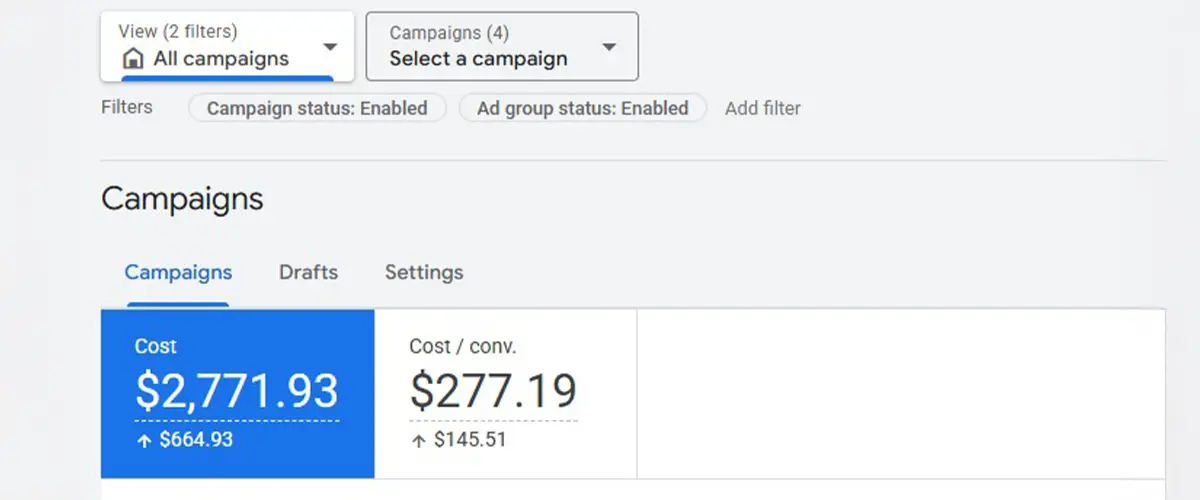
One of the biggest mistakes contractors make when running ads has nothing to do with Google, Meta, targeting, or creatives.
It has to do with how they interpret numbers.
More specifically, what happens emotionally the moment a lead comes in and they see the cost attached to it.
A lead shows up, you glance at the dashboard, you see the number, and almost immediately, your brain labels it: “That’s expensive.”
That reaction feels reasonable. It feels cautious. It even feels responsible, like you’re protecting the business from wasting money.
But here’s the distinction most people never slow down enough to make.
“Expensive” is a feeling.
“Unprofitable” is a calculation.
And confusing the two is where most ad decisions go wrong.
Why Your Brain Is Emotional When Evaluating Ads
Your brain is wired to react to immediate inputs.
It sees a single data point, isolated from context, and tries to assign meaning to it as fast as possible. That’s useful if you’re avoiding danger. It’s terrible if you’re evaluating a system.
Ads don’t work in single moments.
They work in sequences.
A lead, on its own, is not success or failure. It’s just a step in a longer chain that eventually ends in revenue or doesn’t.
Judging ads purely at the lead level is like walking onto a job site, looking at the cost of materials halfway through the build, and deciding whether the project was worth doing at all.
You’re technically looking at numbers. You’re just looking at the wrong ones, at the wrong time.
The Real Issue Isn’t Lead Cost
It’s missing attribution.
This is where things usually break down.
Most contractors try to evaluate ad performance without proper attribution in place. They’re asking questions like:
- Is this working?
- Are these leads good?
- Should we keep spending?
But they’re asking those questions without knowing what those leads turn into.
Without attribution, you can’t see the full path from lead to revenue. You only see fragments. And fragments invite emotion.
Proper attribution connects the dots. It shows you how a lead moves through your business, from the moment it comes in to the moment money hits the account.
Without that visibility, every decision feels heavier than it should, because you’re deciding with incomplete information.
A $250 lead feels expensive.
Until it closes into a $35,000 job.
At that point, the feeling disappears entirely, because the number finally has context.
The problem is that most people never let campaigns run long enough or track performance deeply enough to see the full picture. They react too early, pull back too fast, and end up optimizing for comfort instead of profit.
Numbers aren’t there to reassure you. They’re not there to calm you down or validate your instincts.
They’re there to give you clarity.
When attribution is set up correctly, numbers stop being scary. They become directional. They tell you what’s actually happening inside the system.
You can see what generates revenue, what doesn’t, where money should be pulled back, and where it should be doubled down. Decisions stop feeling personal because they’re no longer based on vibes or isolated data points.
At that stage, emotion becomes irrelevant.
If there’s one thing to take from this: don’t judge ads by how they feel. Judge them by what they produce.
4. Attribution Shows You What’s Working
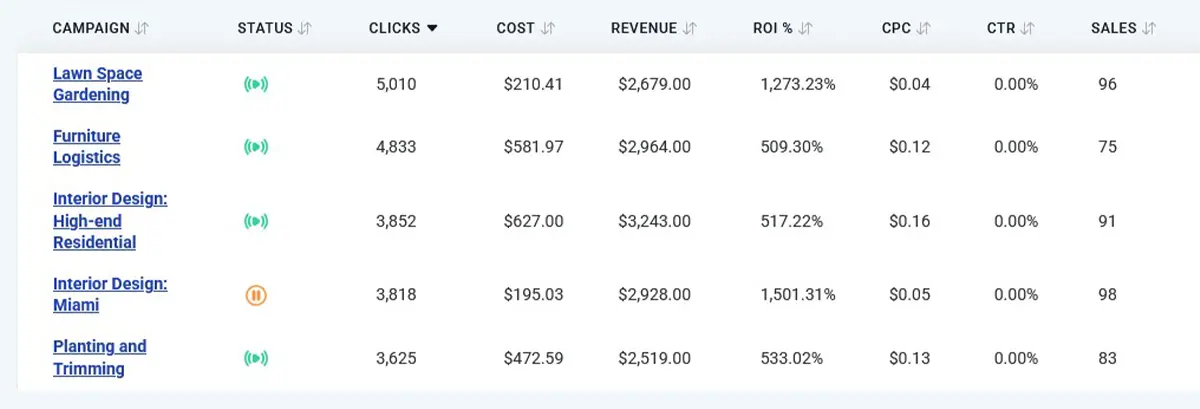
Once you separate how ads feel from what they actually produce, there’s an obvious next question that comes up.
If emotion isn’t the decision-maker… what is?
The answer is attribution.
Attribution is what turns ads from an expense into a controllable process.
It’s the mechanism that connects what happens at the top of the funnel to what happens in the bank account, and without it, every decision is based on assumptions instead of outcomes.
When attribution is set up correctly, you stop asking broad, emotional questions like:
- Are ads working?
- Are these leads good?
- What am I getting in return?
- Which campaigns are generating revenue?
- Which ones aren’t?
- Where is money being wasted?
- Where is it being multiplied?
Why This Is Where Most Money Is Either Lost or Made
When you don’t have attribution, you tend to spread budget evenly, “just in case.”
You keep underperforming channels alive because you’re not sure if they’re bad or just misunderstood. You hesitate to scale what’s working because you can’t see the downstream impact clearly enough to feel confident.
Attribution removes that hesitation.
Once you can see which channels are producing revenue, cutting spend becomes easy. So does doubling down.
There’s no debate, no second-guessing, and no emotional attachment.
The numbers tell you exactly what to do.
The Hidden Benefit: Confidence
This is the part contractors don’t expect.
Attribution doesn’t just improve performance. It changes how you feel about spending money.
When you know where revenue is coming from, increasing the budget stops feeling risky. It feels intentional. You’re no longer “spending more to see what happens.” You’re investing more into what’s already proven.
That confidence alone often becomes the growth unlock.
Ironically, attribution is avoided for the same reason build-type offers struggle.
- It requires structure.
- It requires setup.
- It requires patience.
5. Growing Your Business With Ads Is A Joint Effort

By the time attribution is in place and decisions are made with clarity rather than emotion, one final truth becomes impossible to ignore.
Ads don’t grow businesses on their own.
They never have.
What ads do is create opportunity. They bring attention to the system. They introduce potential customers. They open the door.
What happens after that determines whether the business actually grows.
This is where many contractors quietly sabotage otherwise good campaigns, not because the ads are bad, but because the rest of the system isn’t prepared to capitalize on what the ads create.
The Real Division of Responsibility
- They don’t answer the phone.
- They don’t follow up.
- They don’t get to meet the homeowner.
- They don’t present estimates.
- They don’t close deals.
Why Lead Quality Is Only Half the Equation
Most conversations about ads stop at lead quality.
Are the leads good? Are they motivated? Are they serious?
But even the best leads still require:
- That you reply to them fast.
- That you communicate with them clearly.
- That you have a great sales process in place.
Without those, it’s a way to say that the lead quality is poor when the reality is that the system you have in place failed to support it.
A high-intent lead that waits too long for a call back becomes indifferent. A homeowner who doesn’t hear from you consistently doesn’t feel prioritized. A confusing or unstructured sales process creates hesitation, even when interest is there.
Ads can’t fix that.
This is the part most people underestimate.
Small improvements in how leads are handled often outperform major improvements in ad performance.
Conclusion
- Expecting certainty in a phase designed for learning.
- Expecting Google to understand your business better than someone who works in it every day.
- Expecting lead cost to tell the full story without attribution.
- Expecting ads to compensate for gaps in follow-up, sales, or process.
When those expectations are in place, ads will always feel unpredictable, expensive, and stressful.
The contractors who win long-term aren’t the ones chasing certainty, cheap leads, or shortcuts. They’re the ones who understand that ads are a system.
A system that requires patience in the beginning. Measurement instead of emotion. Clear attribution. And alignment between marketing and sales.
Once those pieces are in place, ads stop being something you “try.” They become something you run.
And that’s the difference between constantly questioning whether ads work and quietly using them to grow year after year.
If you’ve ever felt frustrated by ads in the past, the problem probably wasn’t that they didn’t work.
It was that they were never given the environment they needed to work properly.
Want to see how contractors are slowly moving away from word of mouth to a more independent and efficient lead generation system? Watch our Market Domination Blueprint, specifically designed for U.S. contractors.