
Government construction contracts represent a $150+ billion market that most contractors never tap into.
And they’re not as mysterious or impossible to land as you might think.
Sure, they’re different from a kitchen remodel, but government construction contracts are a gold mine waiting to be unearthed.
In this article, you’ll learn:
- the exact steps to register for government work,
- how to find contracts that match your skills,
- what documents you actually need to submit.
What Makes Government Construction Contracts Different
Compared to residential and even commercial construction, government construction is a whole different beast.
Federal agencies and government buyers follow strict procurement regulations.
Everything happens through formal bidding processes, documented requirements, and structured contracts.
The good news?
Government agencies actively seek small businesses to work with.
Getting Your Contracting Business Ready for Federal Work
Before you can compete for government construction contracts, you need to get registered first.
This is like getting your contractor’s license, but for federal work.
Here’s what you’ll need:
#1. Register for SAM
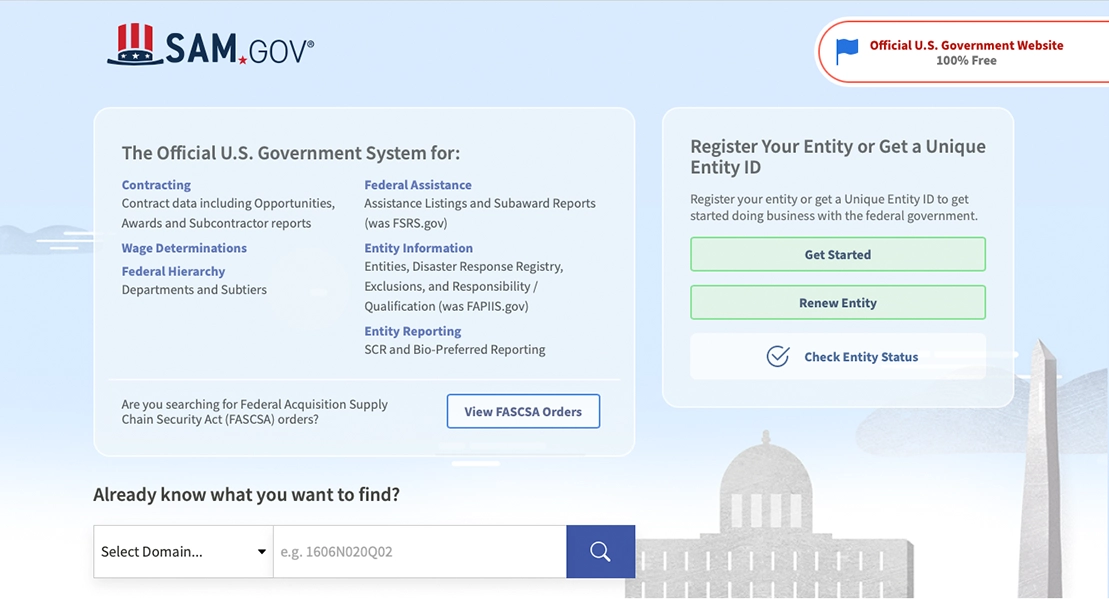
The System for Award Management (SAM) is where every contractor doing federal business must register.
It’s free, and it’s essentially your business profile for government agencies.
To register for SAM, you must provide:
- your detailed business information,
- tax details,
- banking information for electronic payments.
Watch this video to see how to get a unique entity ID on SAM.gov.
#2. Get Your CAGE Code
The Commercial and Government Entity (CAGE) Code is a unique identifier for your business.
Think of it like your business’s social security number for government work.
You’ll receive your CAGE code automatically when you complete your SAM registration.
#3. Get Your NAICS Codes
NAICS codes tell government buyers what kind of work you do. These codes determine which contract opportunities you can bid on.
A general contractor might use NAICS code 236220 (Commercial and Institutional Building Construction). Don’t limit yourself to just one.
Most construction companies should register multiple NAICS codes that match their capabilities.
Other NAICS codes for construction include:
- 237110 (Water and Sewer Line Construction)
- 236210 (Industrial Building Construction)
- 237310 (Highway, Street, and Bridge Construction)
| NAICS Code | Industry Title | Business Count |
|---|---|---|
| ▶ 23 | Construction | 1,512,763 |
| ▶ 2361 | Residential Building Construction | 502,586 |
| 236115 | New Single-Family Housing Construction (except For-Sale Builders) | 352,898 |
| 236116 | New Multifamily Housing Construction (except For-Sale Builders) | 30,754 |
| 236117 | New Housing For-Sale Builders | 6,549 |
| 236118 | Residential Remodelers | 112,385 |
| ▶ 2362 | Nonresidential Building Construction | 64,432 |
| 236210 | Industrial Building Construction | 7,544 |
| 236220 | Commercial and Institutional Building Construction | 56,888 |
| ▶ 2371 | Utility System Construction | 26,309 |
| 237110 | Water and Sewer Line and Related Structures Construction | 17,903 |
| 237120 | Oil and Gas Pipeline and Related Structures Construction | 5,556 |
| 237130 | Power and Communication Line and Related Structures Construction | 2,850 |
| ▶ 2372 | Land Subdivision | 43,704 |
| 237210 | Land Subdivision | 43,704 |
| ▶ 2373 | Highway, Street, and Bridge Construction | 28,817 |
| 237310 | Highway, Street, and Bridge Construction | 28,817 |
| ▶ 2379 | Other Heavy and Civil Engineering Construction | 7,722 |
| 237990 | Other Heavy and Civil Engineering Construction | 7,722 |
| ▶ 2381 | Foundation, Structure, and Building Exterior Contractors | 171,099 |
| 238110 | Poured Concrete Foundation and Structure Contractors | 37,275 |
| 238120 | Structural Steel and Precast Concrete Contractors | 2,607 |
| 238130 | Framing Contractors | 44,087 |
| 238140 | Masonry Contractors | 22,115 |
| 238150 | Glass and Glazing Contractors | 8,258 |
| 238160 | Roofing Contractors | 50,396 |
| 238170 | Siding Contractors | 4,152 |
| 238190 | Other Foundation, Structure, and Building Exterior Contractors | 2,209 |
| ▶ 2382 | Building Equipment Contractors | 314,316 |
| 238210 | Electrical Contractors and Other Wiring Installation Contractors | 115,408 |
| 238220 | Plumbing, Heating, and Air-Conditioning Contractors | 196,219 |
| 238290 | Other Building Equipment Contractors | 2,689 |
| ▶ 2383 | Building Finishing Contractors | 171,325 |
| 238310 | Drywall and Insulation Contractors | 28,919 |
| 238320 | Painting and Wall Covering Contractors | 86,817 |
| 238330 | Flooring Contractors | 12,346 |
| 238340 | Tile and Terrazzo Contractors | 21,184 |
| 238350 | Finish Carpentry Contractors | 11,418 |
| 238390 | Other Building Finishing Contractors | 10,641 |
| ▶ 2389 | Other Specialty Trade Contractors | 182,453 |
| 238910 | Site Preparation Contractors | 39,518 |
| 238990 | All Other Specialty Trade Contractors | 142,935 |
#4. Write A Capability Statement
A capability statement is a one or two-page document outlining your services, past projects, certifications, and what makes your company unique.
Contracting officers use it to quickly understand what your business offers.
Your capability statement should include your NAICS codes, CAGE code, contact information, and a few strong examples of completed projects. Keep it professional but straightforward.
Need a capability statement template that you can use? You can check out an example here: view Capability Statement
Understanding Your Small Business Advantages
Remember how I mentioned government agencies want to work with small businesses? You read that right.
If your company meets the SBA’s size standards, you qualify for contracts exclusively for small businesses.
You won’t compete against massive national firms.
On top of qualifying as a small business, some certifications can seriously reduce your competition and increase your chances of winning bids:
The 8(a) Business Development program helps socially and economically disadvantaged businesses compete for federal contracts.
HUBZone certification is for businesses in historically underutilized area.
Service-Disabled Veteran-Owned Small Business (SDVOSB) certification opens doors to contracts set aside specifically for disabled veterans.
The SBA has counselors who will walk you through these programs for free. They can pair you with a mentor who’s already doing government work and tell you what the market demand looks like in your area for the services you offer.

Compliance and Regulations You Need to Know
Government construction contracts come with requirements you won’t find in typical residential or commercial work:
- Davis-Bacon Wages: Federal construction projects over $2,000 must pay prevailing wages as determined by the Department of Labor. These wages are often higher than typical market rates. Factor this into your bids.
- Certified Payroll: You'll submit weekly certified payroll reports proving you're paying the required wages. This differs from your usual payroll process and requires specific forms.
- American-Made Requirements: Many government construction contracts require the use of American-made materials. That lumber or steel you usually source? You might need to verify its origin.
Finding the Right Federal Contracting Opportunities
Now we get to the fun part: finding government construction contracts to bid on.
Search Contract Opportunities on SAM.gov
Once you register, SAM.gov is the primary tool for finding federal work. The search function lets you filter by location, contract type, NAICS codes, and set-aside types.
You can also join Interested Vendor Lists for agencies that regularly need construction services. When you’re on these lists, contracting officers can contact you directly about upcoming projects.
Start Small (and Specific)
If you’re just starting out, target contracts under the Simplified Acquisition Threshold of $250,000.
These smaller contracts have streamlined processes and less stringent requirements, especially around past performance documentation.
Think about your niche, too.
If you’ve built a reputation as a quality deck builder, look for outdoor structure projects at national parks or military recreation facilities.
Having a clear specialty makes your bids stronger and helps you stand out.
Look Beyond Prime Contracts
As a small business, becoming a prime contractor for a $5 million federal building can seem unrealistic. Seek out subcontracting opportunities instead.
Prime contractors actively seek qualified subcontractors to meet their small business subcontracting goals.
Subcontracting is a smart way to get your foot in government work, and it can be incredibly profitable.
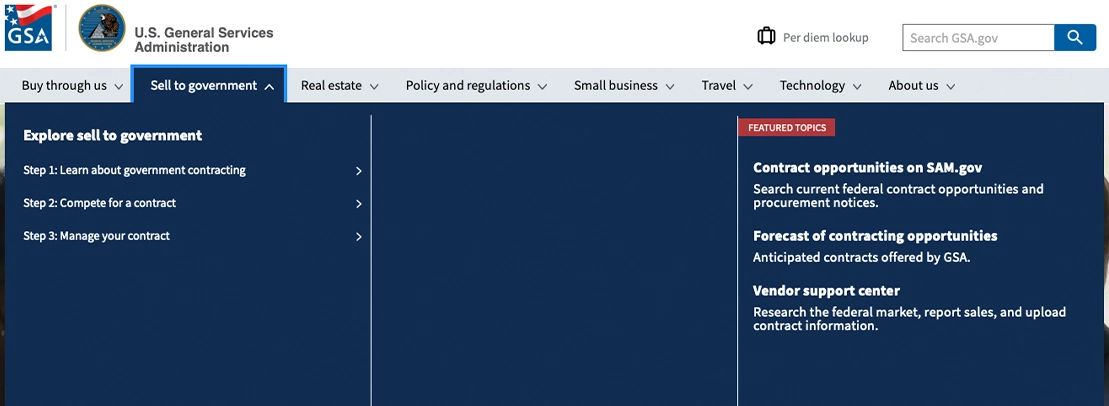
The General Services Administration maintains schedules of pre-approved contractors. Getting on a GSA Multiple Award Schedule means agencies can hire you without going through a full bidding process every time.
The Federal Government Bidding Process
Let’s break down how federal bidding works, because it’s probably the biggest shift from your current contracting work.
Understanding Design-Bid-Build vs. Other Methods
Design-bid-build is the traditional government approach.
The agency designs the entire project, and contractors bid to build it exactly as specified.
You’re bidding on labor and materials to execute someone else’s plans.
Some agencies use indefinite delivery indefinite quantity (IDIQ) contracts. This lets the agency call you for multiple smaller projects over several years without rebidding each time.
Attend Pre-Bid Meetings
When agencies announce significant projects, they often hold pre-bid meetings.
At these meetings, you’ll learn more about the specific project requirements and get answers to technical questions.
It’s also an amazing opportunity to network with agency representatives and other contractors.
Going to pre-bid meetings also shows the contracting officer that you’re serious about the work. Government contracting is still relationship-driven, even with all the formal processes.
What You'll Need to Submit
Government proposals require more than just a price. You’ll typically need:
- Technical approach (how you'll complete the work)
- Past performance examples
- Proposed schedule
- Key personnel qualifications
- Bonding capacity
Bid bonds, performance bonds, and payment bonds are standard in federal construction.
If you’re used to commercial work, you’ve probably dealt with bonding before. For residential contractors, this might be new territory.
Either way, talk to a surety company before bidding on your first federal project. Bonding for government work often has specific requirements.
Be honest about your capacity, expertise, and resources before submitting a bid. If you fail on a government contract, it gets documented in federal databases and can torpedo your ability to win future government work for years. What’s worse than not winning a bid is winning one you can’t confidently perform.
Building Your Track Record as A Federal Contractor
Many government agencies want to see past performance on similar federal work. But how do you get past performance if nobody will give you that first contract?
One strategy many successful contractors use: get a job with an established government contracting company first.
Perform well, volunteer to help in different areas of the business, and ask lots of questions about the process. You’ll build a reputation and a network in the government contracting community.
When you eventually strike out on your own or bid as a prime contractor, you’ll understand how the system works and have relationships with people who can help you.
Federal Vs. State-Level Contracting
State-level construction contracts are a hit or miss mostly because they have their own rules and all states have some nuance.
However, state-level contracts are easier overall if you focus on your home state.
With Federal Contracts you have more opportunity to get jobs, but there’s also more competition.
Also look into SLED contracts. SLED stands for State, Local, and Educational refer to non-federal, public sector market for goods and services in the U.S. It includes state governments, municipalities (cities/counties), public school systems, and universities.
Resources That Actually Help
The federal government provides free training and support for contractors entering government contracting:
- Your local Procurement Technical Assistance Center (PTAC), also called Apex Accelerators in some areas, offers free one-on-one counseling. They can assist with the technical aspects of registration, bidding, and compliance with federal requirements.
- The SBA has online courses on federal contracting. Many agencies have small-business specialists who can explain their specific procurement processes.
When you’re reviewing a solicitation, and something doesn’t make sense, contact the contracting officer. They’re required to answer questions from potential bidders.
Government Construction Contracts FAQ
Micro-purchases under $10,000 are your best entry point. They don’t require the full competitive bidding process, so agencies can just call you if you’re registered in SAM.
Think of painting a few offices at a local VA clinic or fixing concrete at a National Guard facility.
These smaller jobs will get you in the system while you build your track record.
The paperwork and compliance requirements are more complex, and you’re competing against contractors who’ve been doing this for years.
The most difficult part is usually winning your first contract because agencies like to see your past performance.
But once you’ve completed a couple of government projects and proven you can deliver, the doors open wider.
Absolutely. Many contractors start by bidding on smaller government projects while maintaining their residential business. Just make sure to deliver if you win a contract.
Government agencies track contractor performance, and a failed project will hurt your ability to win future work.
Check the specific standards for your NAICS codes on SBA’s site. Construction companies can have higher revenue and employee counts than many other industries and still qualify.
If you don’t qualify, you can still bid on full and open competitions. You just won’t receive small-business set-asides.
Bond costs typically run 1-3% of the contract value annually, depending on your financial strength and the surety company’s assessment of risk.
For a $100,000 contract, expect to pay $1,000-$3,000 for bid, performance, and payment bonds. Establishing a relationship with a surety company before you need bonds makes the process smoother.
Biggest Thing That Helps You Get Government Construction Work
Imagine you’re bidding a contract, you spark interest, but whoever looks you up online finds no information about you or your work.
A powerful brand with a strong online presence can seal ANY deal for you.
That means a website that’s easy to navigate, shows the work you do, shows how you’re different, and that makes it easy to choose you.
Besides a website, we notice people really do appreciate wrapped vehicles, branded workwear, beautiful business cards, and more.
Making It Work for Your Contracting Business
Government construction contracts can provide steady, recession-resistant revenue.
But here’s what I want you to understand: this isn’t a get-rich-quick scheme. Construction skills and experience aren’t enough.
You need to be findable, credible, and professional across every touchpoint where government agencies evaluate you.
That’s where partnering with a marketing company that understands contracting businesses makes the most sense.
With the right partner in your corner, your online presence can impress any type of lead and sway them to your favor very quickly.
Want to see how contractors are slowly moving away from word of mouth to a more independent and efficient lead generation system? Watch our Market Domination Blueprint, specifically designed for U.S. contractors.