
A $15,000 quote loses jobs. A $189/month payment closes them.
Learning how to offer financing as a contractor might be the single most important move you make this year.
If you’re not offering payment options yet, you’re handing jobs to competitors who are.
Here’s everything you need to get started: the types of financing, the real cost considerations, and the partners other contractors actually recommend.

Why Contractors Should Offer Financing
Not convinced yet? Here are the key benefits of offering financing for your contracting business.
More Sales, Bigger Projects
When a customer knows they can pay over time, they stop shopping for the bare minimum option. They start looking for higher-quality upgrades and larger projects.
That cheap vinyl window becomes a premium fiberglass unit. A basic wood deck turns into the composite decking they actually wanted.
Customer financing doesn’t just help you close more deals. It helps you sell up.
You Get Paid Faster
One common misconception is that offering financing means waiting longer for payment.
With third-party financing, it’s actually the opposite.
The lender pays you directly (either upfront or in staged draws) and handles collecting payments from the homeowner.
No more chasing down the final payment months after the job is done.
Win Jobs Your Competitors Won't
A huge chunk of your competition either doesn’t offer financing options at all or just tells homeowners to get a HELOC.
When you present easy payment options, you immediately stand out from competitors who leave homeowners to figure out funding on their own.
That’s your competitive edge.
Contractors who offer financing win jobs on that basis before price even becomes a factor.
Protect the Customer's Savings
Nobody wants to drain their emergency fund to pay for a roof replacement.
Home improvement financing lets customers keep their cash reserves intact, making the decision feel much less scary.
3 Types of Contractor Financing Options
Not all contractor financing options work the same way.
Here’s all you need to know about your options, the typical financing process, and what we’d recommend.
1. Third-Party Financing (Recommended)
Simply partner with a specialized financing partner (think Hearth, Wisetack, GreenSky, Momnt, or Acorn Finance). They’ll handle everything from underwriting, approvals, and loan servicing.
Once you present the financing options to your customer, they can apply in a few minutes.
And when the job is done, the lender pays you directly.
This is the one most contractors should choose. It’s low risk, low overhead, and entirely hands-off.
2. In-House Financing
This is where you act like a bank and offer loans to your clients.
Honestly, small and mid-size contractors should avoid this due to the risks involved.
You’re taking on credit risk, you have to manage collections, and if a customer stops paying, you’re the one bearing the loss.
3. Customer-Sourced Financing (HELOCs and Personal Loans)
Some homeowners secure personal loans through a home equity line of credit or other financial institutions, like their local bank.
The upside? Zero risk on your end. The downside? You have no control over the timeline.
The approval process at banks can be slow, which can cause project delays.
Understanding the Costs of Contractor Financing

Before you start offering financing, you need to understand exactly what it costs you and how it affects your payment terms.
The Reality of "0% APR" Offers
When you offer a promotional deal like “12 months same as cash,” that’s not free.
The lender charges you dealer fees, typically ranging from 4% to 15% or more. This percentage depends on the promotional period and the customer’s credit score.
So, on a $10,000 job with a 12% dealer fee, you’re netting $8,800.
How to Manage Contractor Financing Fees
A few strategies you can use to offset dealer fees:
- Build it into your pricing model. If you're offering 0% financing, factor in the dealer fee into the initial quote.
- Zero-cost averaging. Balance promotional (high-fee) loans with standard, no-fee financing options. Not every customer needs the 0% offer.
- Use residual payments. Some financing partners reduce fees based on your track record or volume.
The key is knowing your numbers before you start offering financing, not after.
Handling Common Customer Concerns
It’s normal for home improvement customers to have questions about financing. What’s important is knowing how to answer them.
“What are the interest rates?”
Redirect the conversation.
Your answer should be: “Let’s talk about what the monthly payment looks like for you.”
Interest rates sound intimidating in isolation. Affordable monthly payments are what actually matter to most homeowners.
“Won’t applying hurt my credit?”
Most financing for contractors uses a soft credit pull for the initial application. This does not affect the customer’s credit score. It’s crucial to make this clear early on.
Important Legal Considerations
The Truth in Lending Act (TILA) requires contractors to properly disclose financing terms.
If you’re presenting monthly payments and interest rates, those disclosures need to be accurate and compliant.
Some states also impose stricter disclosure requirements on contractors who present or recommend financing options to customers.
If you operate in any of the following states, consult a local attorney before launching a financing program:
- California
- New York
- Utah
- Virginia
- Florida
- Georgia
- Kansas
- Connecticut
Top 5 Financing Companies for Contractors
We’ve looked at what real contractors are using to find the best options for your business.
1. Wisetack
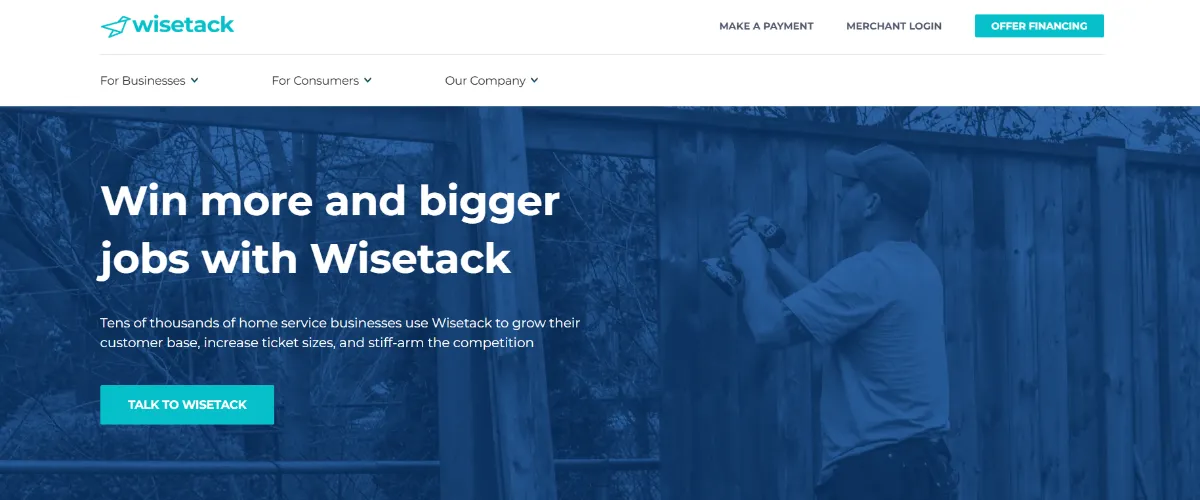
Wisetack is probably the most talked-about option right now, and for good reason.
Contractors praise its simplicity, transparent fee structure (around 4%), and fast payouts, typically within 2-3 days of the customer confirming job completion.
It also integrates directly with Housecall Pro and Jobber, which makes embedding it into your sales process genuinely effortless.
2. Hearth
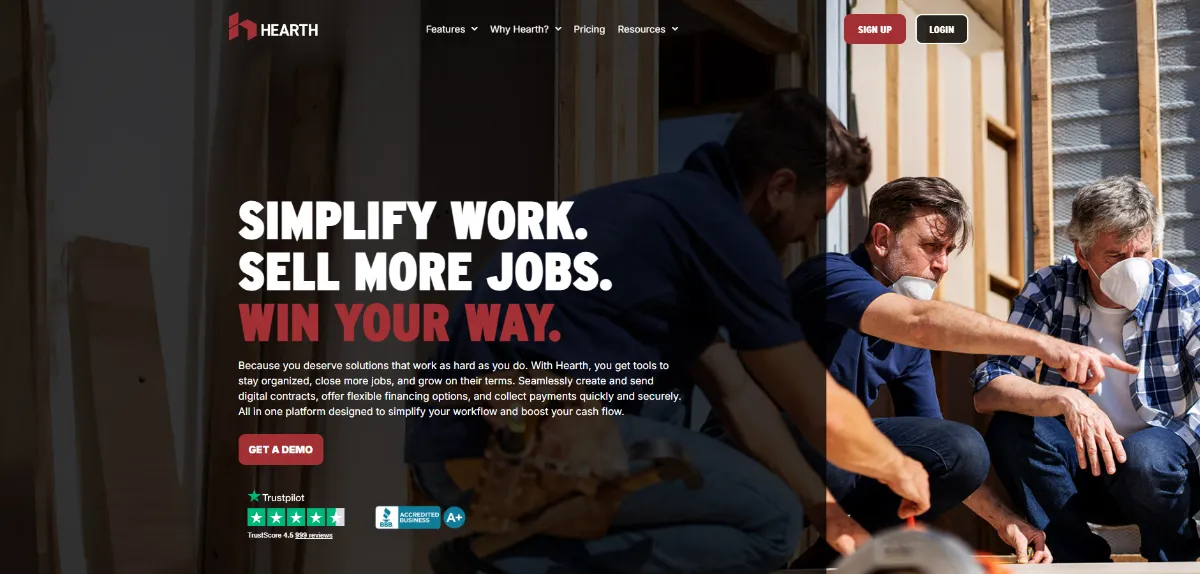
Hearth is another consistently recommended option.
Contractors highlight it as reliable on both sides of the transaction. They get paid, and their customers don’t get burned by surprise terms or hidden fees.
It’s a strong pick if you want a straightforward, proven option with good customer support.
3. Wells Fargo Home Projects
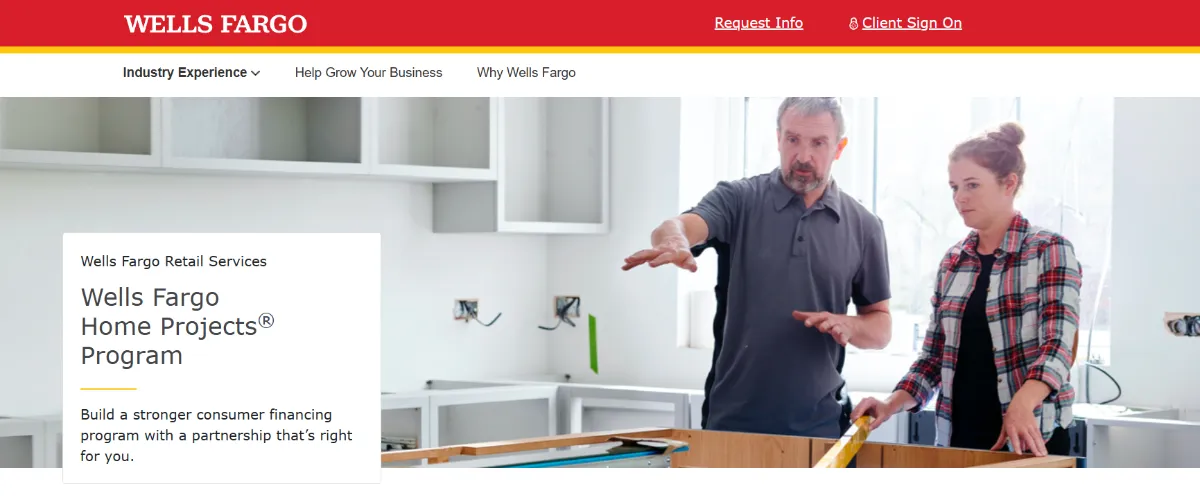
Wells Fargo is a familiar name, and many contractors simply send clients a direct link to apply.
It’s widely used for home improvement financing and carries the trust factor of a major bank.
Just keep an eye on the “chop”: the fee they take, depending on which promotional rates you decide to offer.
4. Acorn Finance
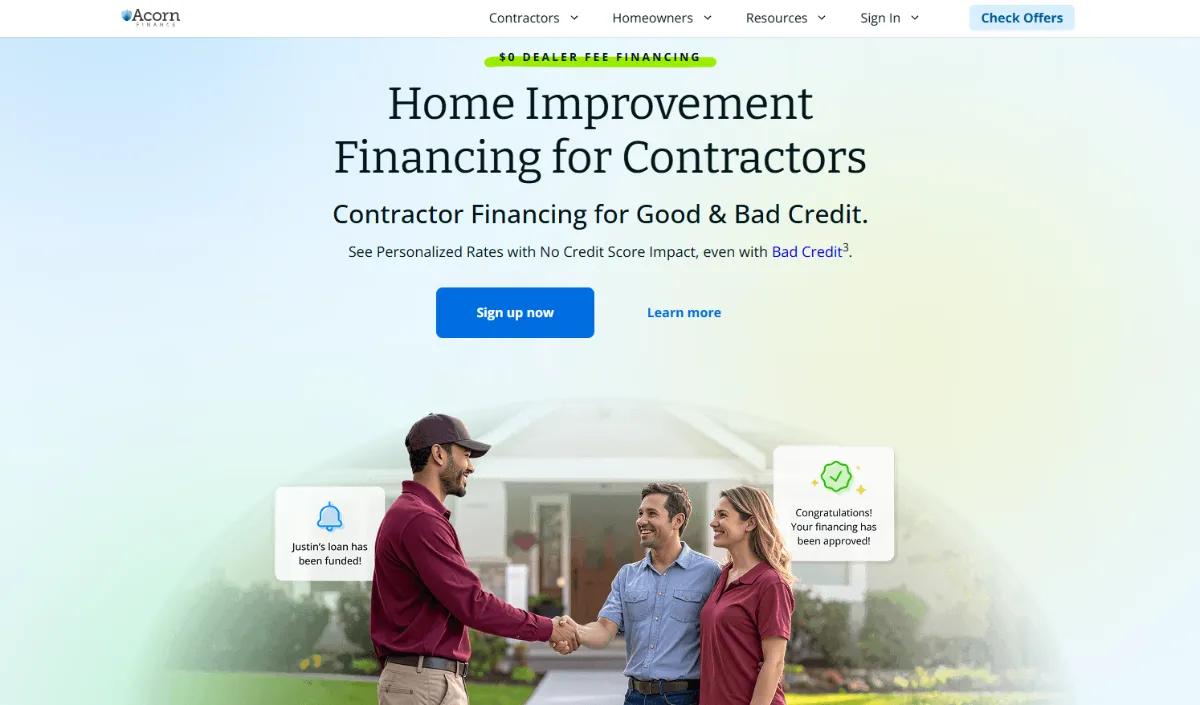
Instead of a single lender, Acorn routes the customer’s application through a network of lenders to find the best match.
No hard credit pull is required to check options, making it low-friction for homeowners.
5. Synchrony
Synchrony is great if you want greater control over the financing structure.
You can set interest rates and promotional options, letting you customize what you offer based on project size or customer profile.
Once the job is done, Synchrony pays the contractor directly.
What to Look for in a Financing Partner
Before you sign up with a financing company, here is a quick checklist to evaluate their application and approval process:
- High Approval Rates: Can they approve people with a wide range of credit scores?
- Soft Credit Checks: Does the initial check hurt the customer's credit? (It shouldn't).
- Reasonable Dealer Fees: Are the costs fair compared to the industry average?
- Fast Funding: How quickly do you get paid once the job is signed or finished?
- Seamless Integration: Does it work with your CRM (JobTread, Jobber, Housecall Pro, etc.)?
- Easy Application Process: Can homeowners apply for financing easily using QR codes or mobile-friendly apps?
A financing partner with competitive interest rates but a clunky application process will kill your sales momentum. The best ones make the application feel invisible.
How to Sell Financing Without Being Pushy
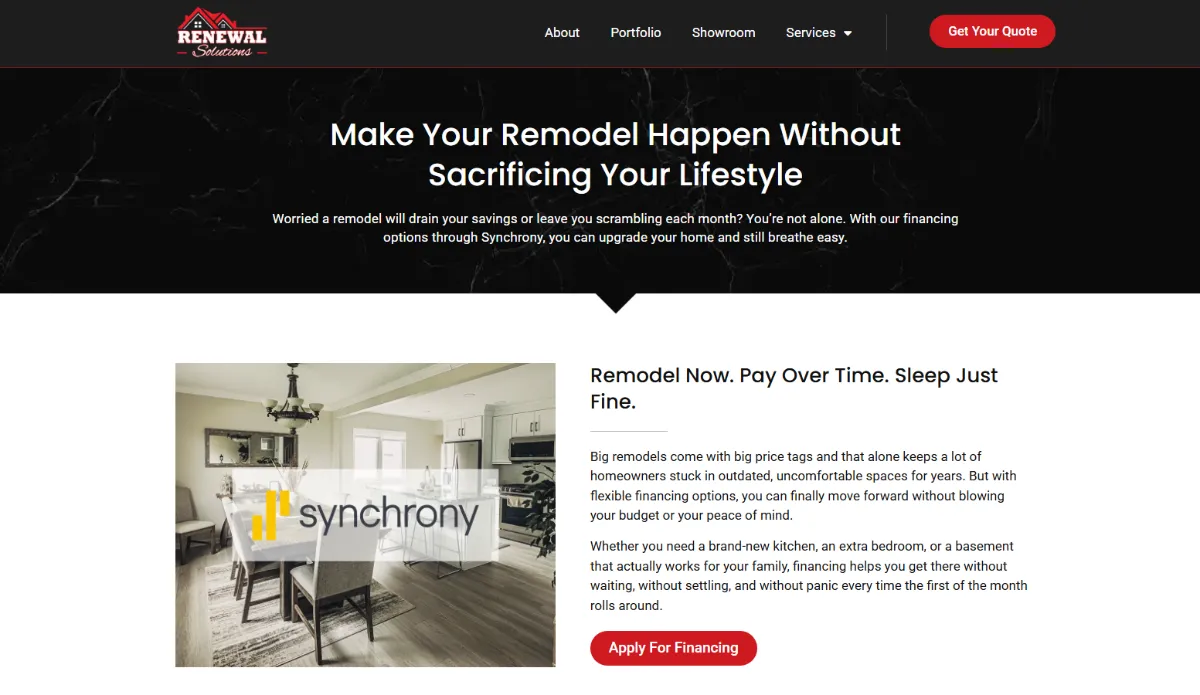
Offering contractor financing shouldn’t wait until the very end.
Here’s how to naturally incorporate affordable financing options into your sales conversation.
Bring It Up Early
Mention payment options at the start of the sales conversation.
Something like: “By the way, we work with a few financing companies, so if monthly payments work better for you, we can definitely make that happen.”
Rather than zeroing in on the total number, the customer is reassured by the available options.
Change Your Language
Don’t overuse the word “financing.” For many homeowners, it reminds them of debt. Something they shouldn’t be signing up for.
Instead, say “monthly payment options.” It sounds lighter, more flexible, and far less intimidating.
Frame the Cost Differently
Instead of telling a homeowner that a new roof costs $20,000, tell them they can protect their home for $185 a month.
This makes the project feel manageable. It allows them to focus on the value rather than the total project costs.
Financing Is a Marketing Engine, Not Just a Closing Tool
Most contractors think of financing only at the end of a pitch.
Here’s your chance to think bigger and use it to find new customers.
This Is Where Digital Marketing Comes In
Signing up with Wisetack or Hearth is only the first step.
The next step is marketing it to potential customers so they know your financing program exists.
Here’s what an effective digital marketing approach to contractor financing looks like:
- Ad campaigns built around monthly payments. Run Google and Facebook campaigns specifically designed around your financing offers. "Upgrade your bathroom for $149/month" converts better than a generic "bathroom remodeling" ad.
- Financing landing pages and pre-qualification funnels. Build dedicated landing pages with embedded soft-pull pre-qualification links and QR codes. Homeowners can find out what they're approved for before they ever talk to you.
- Custom-branded materials. Financing companies give you generic flyers and links. We take those tools and rebuild them with your branding, so everything looks cohesive and professional across your website and ads.

Signing up for a financing program gets you access to a powerful tool. Marketing it properly is what actually turns that tool into revenue.
Your Financing Program Is Only As Good As Its Visibility
Knowing how to offer financing as a contractor is a real competitive advantage.
You’ll close more deals, increase your average sales and project size, and complete projects for customers who otherwise couldn’t afford them.
But a financing program that nobody knows about might as well not exist.
The contractors who see real results market their payment options at every touchpoint: in ads, on their website, and inside every proposal.
That’s the difference between financing as a nice-to-have and financing as a growth engine.
The lenders give you the tool. But no one hands you the ads, the landing pages, or the branded materials to actually reach homeowners.
Want to see how contractors are slowly moving away from word of mouth to a more independent and efficient lead generation system? Watch our Market Domination Blueprint, specifically designed for U.S. contractors.
Contractor Financing FAQs
No, most third-party lenders pay you within a few days of project milestones or completion.
No. Partners like Hearth and Acorn work with multiple lenders to help people with various credit backgrounds.
It depends on the lender and the promotional terms, but expect somewhere between 4% and 15%. The key is accounting for that fee before you quote, not after you’ve committed to a price.
Yes, many lenders have minimum loan amounts as low as $500 or $1,000.